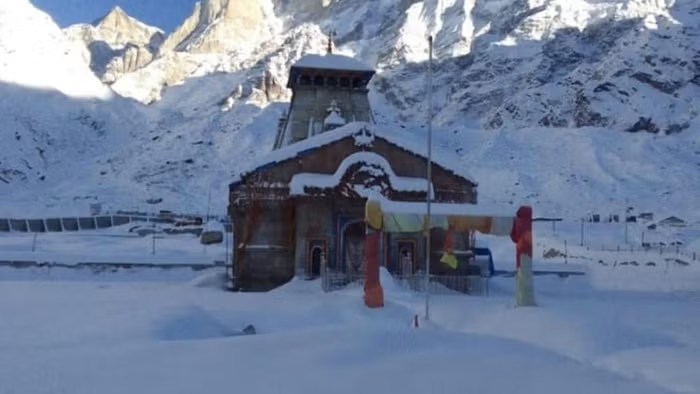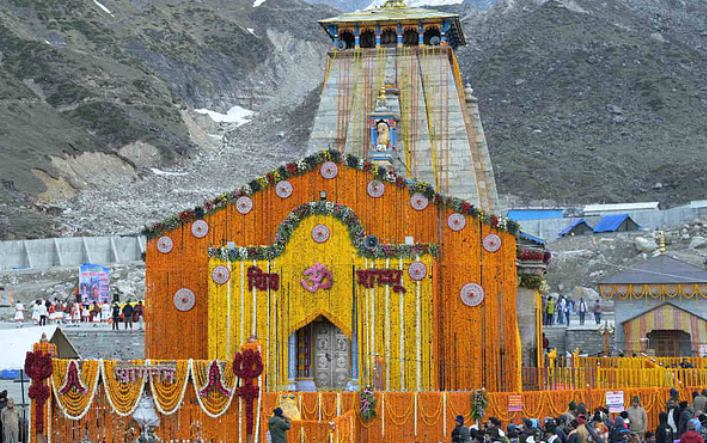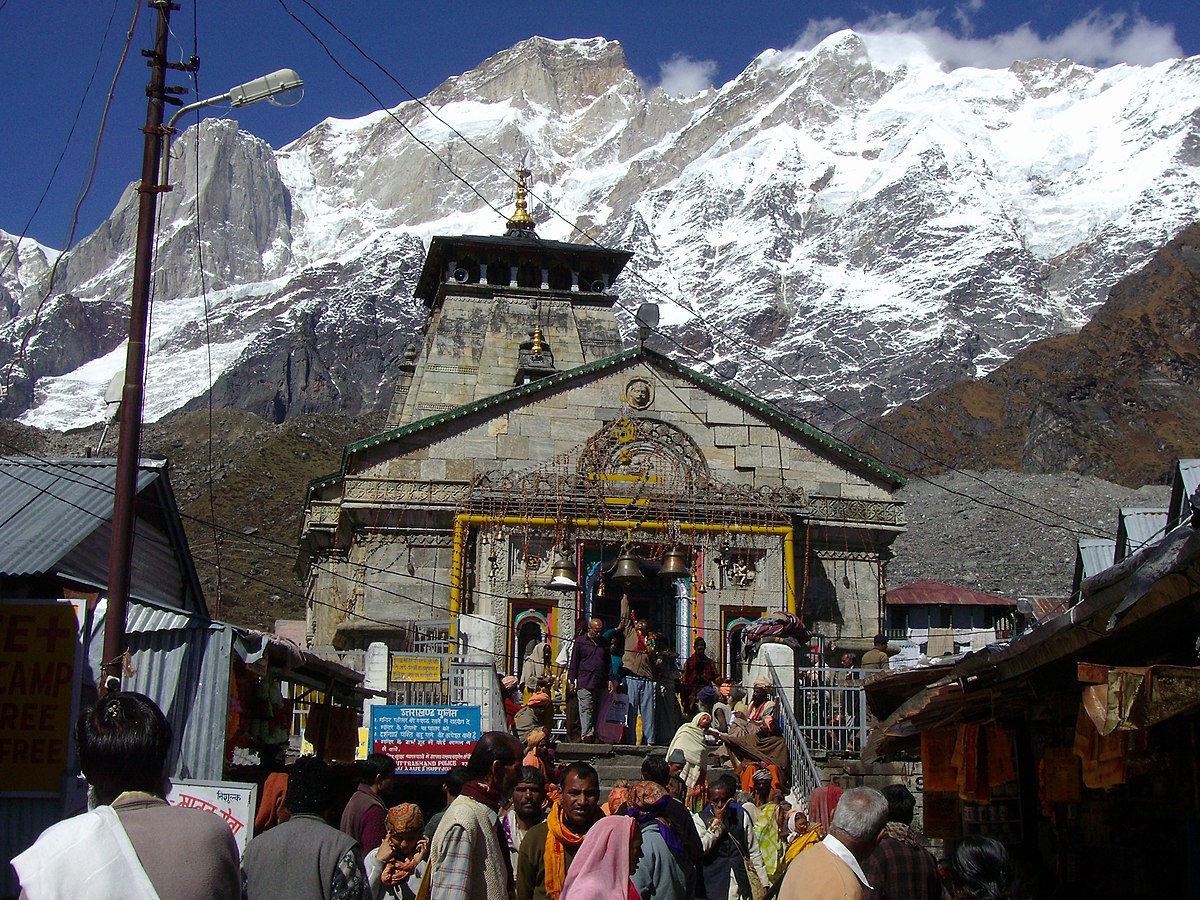
Rudraprayag: While severe cold has forced a halt to construction work under the Badrinath Master Plan, reconstruction activities are continuing at Kedarnath Dham despite temperatures dropping to minus 10 degrees Celsius. This rare situation has emerged after nearly seven years, as the Kedarnath valley has not seen significant snow accumulation in the first week of January.
Normally, by January, eight to ten feet of snow covers the shrine area, bringing all construction work to a standstill. Last year, around this time, snow accumulation had already reached three and a half to four feet. This winter, despite three spells of light snowfall, snow has failed to settle. Weather experts attribute this to a shift in weather patterns and weakened western disturbances.
Due to these conditions, more than 50 workers are currently engaged in reconstruction work at the shrine. However, work is limited to four to five hours during the afternoon, mainly involving welding and wooden structures. Officials say nearly 95 percent of the second phase of reconstruction has been completed, and the remaining work will be finished before the 2026 Kedarnath pilgrimage.
The third phase of the project proposes 22 new construction works, for which land acquisition is yet to be completed. A similar situation was observed in 2019, when snowfall was delayed and construction continued into early January. Usually, workers return by the last week of December, but this year, work is still underway.
District Disaster Management Authority executive engineer Raghvendra Singh said that the absence of early snowfall has allowed work to continue, though the cold remains intense. He confirmed that such conditions are uncommon for this time of year.
Also Read This – Ankita Murder Case: Torch March in Dehradun Tomorrow, Statewide Bandh on Jan 11
Climate experts have raised concerns over the changing weather trends. Garhwal Central University senior professor Dr Mahavir Singh Negi said the lack of rain and snowfall points towards climate change and global warming. He added that shifting western disturbance patterns, reduced atmospheric moisture, increased construction activity, and rising black carbon levels in the Himalayan region are contributing to these abnormal conditions, potentially creating extreme future risks.