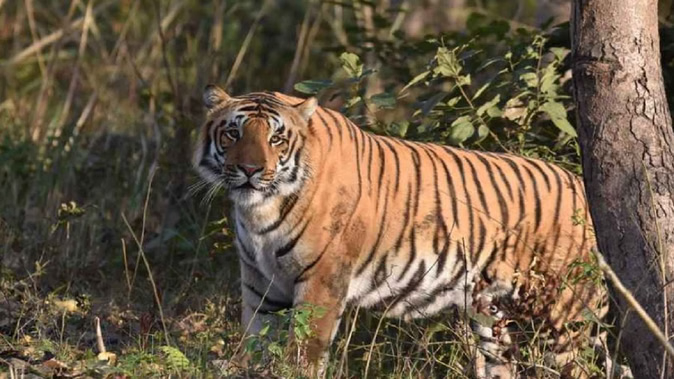
Uttarakhand has strengthened its position as a key wildlife conservation state, with rising populations of tigers, elephants and other species across its forest landscape. With 71.05 percent of its geographical area under forest cover, the state has become one of India’s most significant habitats for wildlife.
Sustained conservation measures have led to a steady increase in animal numbers. Tiger population in the state has grown from 245 in 2003 to 560 in the 2022 census. Ongoing estimation exercises indicate the number may cross 600. Tigers are now expanding beyond reserves such as Jim Corbett National Park and Rajaji National Park into higher Himalayan regions. Camera traps earlier confirmed tiger presence at an altitude of 14,000 feet in the Madhyamaheshwar area.
Elephant numbers have also shown a rise. From 1,582 in 2003, the population increased to 2,026 in the 2020 count across an estimated 6,500 sq km stretch between the Yamuna and Sharda rivers. Fresh data from the ongoing census is expected to provide updated figures.
Snow leopard conservation efforts have yielded notable results. Their population increased from 30 in 2005 to 124 in 2022, reflecting focused monitoring and habitat protection in high-altitude zones.
Around 16 percent of Uttarakhand’s forest area has been designated as protected zones dedicated to wildlife conservation. These include six national parks, seven wildlife sanctuaries, and four conservation reserves. Key protected areas include Nanda Devi National Park, Valley of Flowers National Park and Gangotri National Park. Conservation reserves such as Asan Wetland and Jhilmil Jheel also support biodiversity.
Also Read This – CM Dhami Celebrates Holi with Folk Artists at Official Residence
National parks in the state cover over 5,028 sq km, wildlife sanctuaries span about 2,683 sq km, and conservation reserves extend across more than 21,000 hectares. Alongside this growth, officials acknowledge that human-wildlife conflict remains a rising challenge that requires sustained management