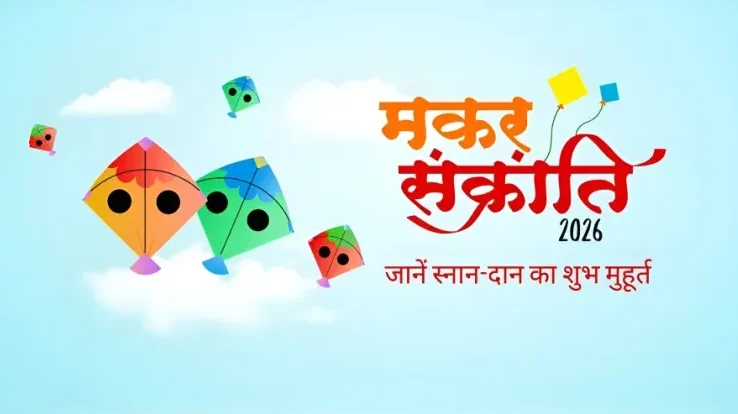
With the festival of Makar Sankranti, the Sun will begin its six-month-long northward journey, known as Uttarayan. The transition marks the end of the Hemant season and the beginning of the Shishir season. Along with this celestial change, traditional jaggery and sesame-based festivals will commence across different regions.
After completing its six-month Dakshinayan phase, the Sun will start moving northwards from January 14. This movement signals the start of Uttarayani festivals. With the onset of the Magh month, restrictions on auspicious activities such as marriages will be lifted. The festival period of Makar Sankranti will remain valid from sunrise to sunset on January 14.
On Wednesday, during Magh Krishna Ekadashi, Sun God will transit from Sagittarius to Capricorn in the Anuradha constellation. Religious belief holds that once the Sun enters Capricorn, sesame-related rituals and festivals gain prominence. Key festivals during this period include Lohri, Sakat Chauth, Shattila Ekadashi, Basant Panchami and Mauni Amavasya.
As the Sun moves from the southeast towards the north, scriptures suggest that winter gradually begins to recede from Makar Sankranti. However, the intense 40-day cold spell that started in late December is expected to continue until February 8.
Makar Sankranti is celebrated under different names across India. In Punjab, it is observed as Lohri, in Assam as Bihu, and in several hill states as Uttarayani. In the Gangetic plains, the festival marks the beginning of ritual bathing, while in mountainous regions it holds special cultural significance. Traditionally, khichdi made of rice and black lentils is prepared, consumed and donated on this day.
According to religious belief, Makar Sankranti represents the dawn period of the gods, which lasts until mid-July. This belief is also linked to the legend of Bhishma Pitamah, who waited for Uttarayan to attain salvation.