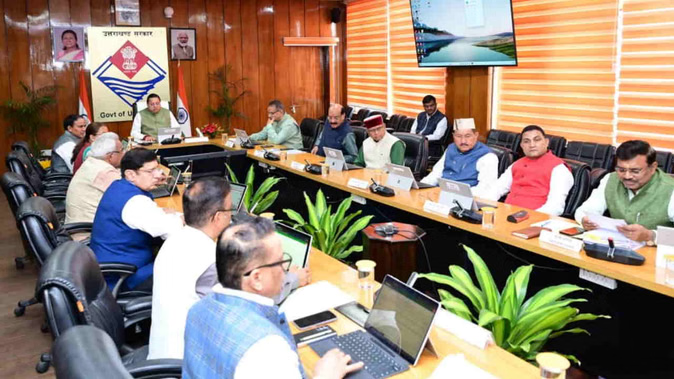
The Uttarakhand government has assigned responsibilities to 82 leaders, with the Bharatiya Janata Party now preparing to expand their roles to strengthen outreach at the grassroots level ahead of the विधानसभा elections. A structured plan has been finalised to ensure government schemes reach beneficiaries more effectively across the state.
Party sources said that the selected leaders have strong local influence and recognition in their respective regions. The appointments are part of a broader strategy to align government functioning with organisational goals, particularly as the election timeline approaches.
After the distribution of responsibilities by the Dhami government, the BJP has moved to integrate these leaders into its electoral planning. The selection process reflects what party insiders describe as “micro-level planning,” focusing on individuals with proven ground connect. Notably, some leaders who recently joined the BJP from other parties have also been included, indicating a calibrated effort to consolidate political support.
The party has already conducted two rounds of internal surveys to assess its preparedness. Based on these findings, emphasis has been placed on regions where the organisation considers itself relatively weak. In such areas, these appointed leaders are expected to act as key links between the government and the public.
Party officials have instructed all responsibility holders to actively engage with citizens and ensure that welfare schemes and their benefits reach the intended population. Their performance at the grassroots level is expected to play a role in determining future चुनाव-related assignments.
Kundan Parihar, State General Secretary of BJP, stated that these leaders will act as a bridge between the government and the organisation. He added that their role in delivering schemes to the public will directly impact the party’s strength in the upcoming elections.
Also Read This – April Sees Snowfall in Chakrata, Cold Wave Returns as Temperature Drops
While the move reflects a coordinated electoral strategy, its effectiveness will depend on how efficiently these leaders translate policy into visible outcomes on the ground, particularly in underserved areas.