Chamoli, 17 Oct: A glacier broke near Kanchan Ganga in the vicinity of the revered Badrinath Dham in Chamoli district yesterday, triggering temporary alarm in the region. A video capturing the moment of the glacier’s collapse has surfaced and has gone viral, drawing widespread attention. However, there has been no report of any loss of life or property following the incident, according to the Chamoli Police.
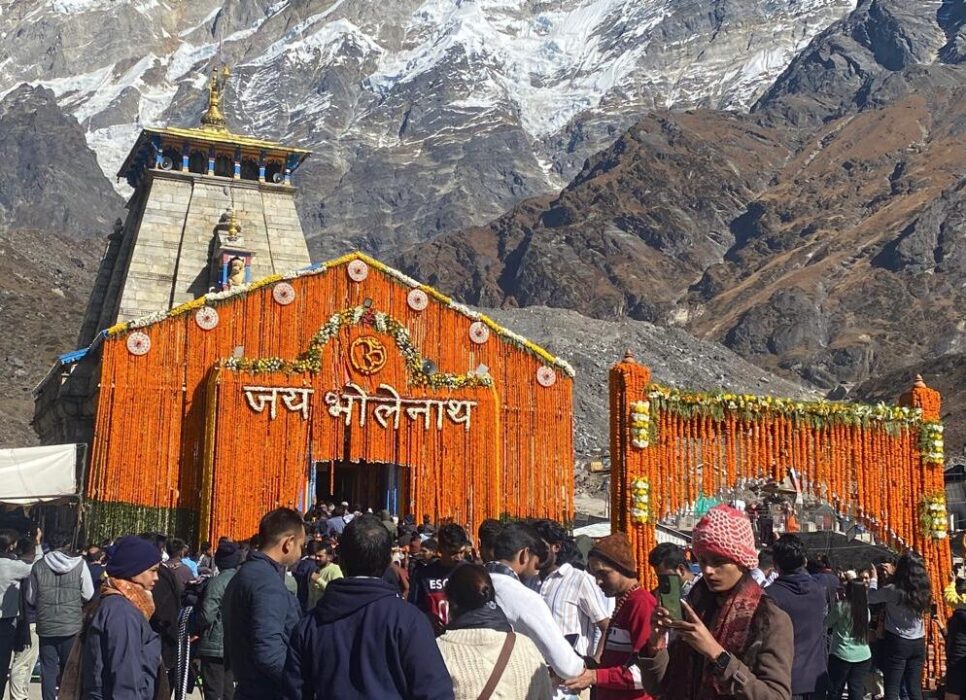
In the video received from Badrinath Dham, a large section of the glacier above Kanchan Ganga can be seen detaching and rapidly sliding downhill. It is being observed that heavy snowfall over the higher reaches of Badrinath Dham in recent days, followed by bright, sunny conditions, has contributed to such glacial movements. Strong sunlight often causes glaciers to become unstable and slip downwards, leading to occurrences of this nature. Similar incidents are frequently observed in the upper regions of Kedarnath Dham as well.
Experts claim that currently, high-altitude regions of Uttarakhand are experiencing rising daytime temperatures due to clear weather, with warm days and cold nights creating conditions that lead to cracking and slipping of glacial surfaces, resulting in minor avalanches. SP Chamoli, Sarvesh Pawar noted that such incidents are common during this season, explaining that the sliding of snow in elevated areas after exposure to sunlight is a natural phenomenon and he asserted that is no cause for panic or the spread of rumours. His team inspected the site and confirmed that it was a routine minor avalanche which resulted in no damage.
Experts have described the event as part of natural processes of the Himalayan region. Geologists and glaciologists say that avalanches of this nature are quite familiar in the Himalayas, as rising temperatures cause the snow accumulated on glaciers to melt and slide downhill under the influence of gravity. However, they also emphasise the importance of monitoring to ensure that such smaller movements do not trigger larger avalanches, particularly in snowbound zones where Army personnel and security forces are deployed. It is reported that the video pertains to an area far removed from human habitation, near a stream, and such avalanches are regularly witnessed in remote, high-altitude locations, especially during sunny periods when direct sunlight strikes the snow.
Presently, the weather around Badrinath Dham and the surrounding regions remains clear, increasing the likelihood of glacial slips from exposed surfaces. The administration has appealed to devotees and local residents not to pay attention to rumours and to rely solely on information provided by the Meteorological Department or district authorities.
It may also be recalled that on 28 February, earlier this year, a major avalanche had occurred at Mana, near the Indo-China border ahead of Badrinath Dham in Chamoli district. In that incident, 54 labourers working at the site were trapped under snow. The Indian Army and Indo-Tibetan Border Police succeeded in rescuing 46 workers but the remaining eight had lost their lives in the avalanche.