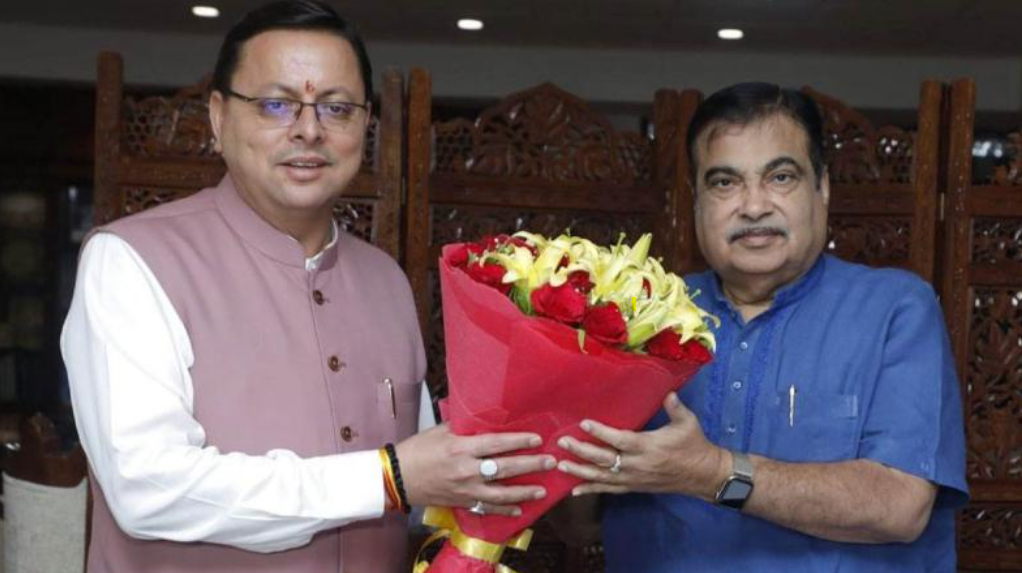
Union Road Transport Minister Nitin Gadkari on Saturday voiced strong concern over the growing wealth disparity in the country. Speaking at an event in Nagpur, Gadkari said that the number of poor people is steadily increasing while wealth continues to concentrate in the hands of a few rich individuals—a trend he called dangerous for society.
He emphasized the need for decentralization of wealth, adding that economic systems should focus on generating employment and promoting rural development. “We must not allow all the wealth to remain with a few. A healthy economy is one where every segment grows, especially the villages,” he said.
Highlighting the imbalance in economic contribution, Gadkari noted that 65–70% of the population depends on agriculture, yet the sector contributes only 12% to India’s GDP, whereas industry contributes 22–24% and services 52–54%.
Gadkari also praised former Prime Ministers P.V. Narasimha Rao and Dr. Manmohan Singh for their liberal economic policies, while warning against unchecked centralization. Quoting Swami Vivekananda, he remarked, “One cannot preach philosophy to an empty stomach.”
On the role of Chartered Accountants (CAs), he said they should not limit themselves to tax filing, but emerge as key players in driving economic growth.
Gadkari cited the Build-Operate-Transfer (BOT) model, which he introduced, as a turning point in infrastructure development. He mentioned that India now earns ₹55,000 crore annually from tolls, expected to rise to ₹1.4 lakh crore in the next two years. If monetized for 15 years, this could generate ₹12 lakh crore in revenue.
He also referenced the ₹5,000 crore ropeway project in Kedarnath, where a private contractor has agreed to build and pay ₹800 crore in royalty to the government. Addressing concerns about foreign capital, he clarified that India’s infrastructure is being built using domestic funds, and not through investments from the US or Canada.
The Minister concluded by stating that retail investors are seeing 18–20% returns, noting that shares once priced at ₹100 have now reached ₹160, reflecting rising confidence in infrastructure-backed investments.