By Arun Pratap Singh
Garhwal Post Bureau
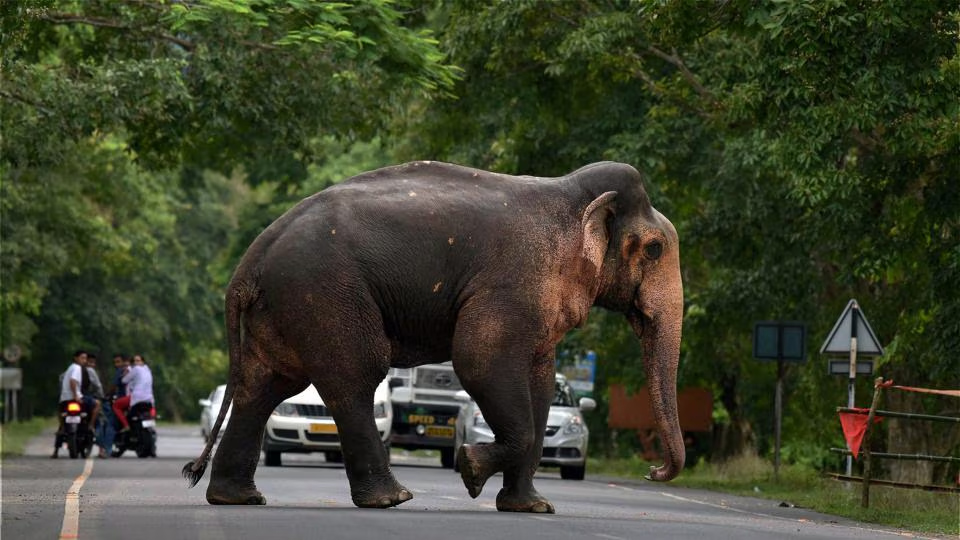
Dehradun, 6 Nov: With more than 500 people having lost their lives in elephant attacks over the past ten years, the Uttarakhand Forest Department is facing one of its most serious wildlife challenges to date. The growing frequency of human-elephant encounters, particularly in Haridwar district, has compelled the department to revive its earlier ‘Elephant Friend’ (Hathi Mitra) initiative. The move is being planned in view of mounting concerns over the increasing movement of elephants into human habitations and the consequent rise in conflict incidents.
The ‘Elephant Friend’ concept, first introduced several years ago, is being restructured to involve trained local volunteers, mainly former mahouts and other experienced and trained volunteers to act as the department’s first line of communication and response. These volunteers will be expected to monitor the movement of elephants in rural and semi-urban regions, alert forest officials promptly, and help guide elephants safely back to forested areas to prevent clashes.
According to PCCF, Wildlife, RK Mishra, changing elephant behaviour and shrinking natural habitats have necessitated greater vigilance and community involvement. He said the renewed initiative aims to ensure that those best acquainted with elephant habits, locals and mahouts, can assist in observation, early warning, and conflict mitigation. These ‘Elephant Friends’ will also spread awareness among villagers about elephant behaviour, migratory routes, and safety measures, helping to bridge the gap between the department and the community.
Experts attribute the rising conflict to expanding development in forested areas, disruption of natural corridors, and extreme weather events. As elephants find their traditional routes blocked by infrastructure such as highways, railways, and housing projects, they increasingly stray into human settlements and agricultural lands.
As per the statistics of the forest department, Uttarakhand’s elephant population has steadily increased, from around 1,839 in 2017 to about 2,026 in 2020, further intensifying the challenge. During this period, eleven elephant corridors were identified, many of which have since suffered fragmentation. In 2024, the state government declared these corridors as eco-sensitive zones to ensure safer passage for elephant herds.
Under the revived ‘Elephant Friend’ programme, local volunteers will be the Forest Department’s eyes and ears on the ground. They will be responsible for reporting elephant movement promptly and guiding herds away from danger zones. The department will also conduct training and awareness sessions to ensure that both elephants and humans remain safe during interactions. Mishra emphasised that these volunteers would act as ‘frontline responders’, assisting in guiding elephants, mitigating panic, and reducing loss of life on both sides.
The forest officials maintain that effective management of eco-sensitive zones, restoration of traditional elephant corridors, continuous monitoring, and sustained community participation are vital to addressing the growing crisis. They also admit a greater need for robust communication between the forest department and the local residents, along with periodic data gathering and awareness campaigns.
As per the department’s data, more than 500 human deaths due to elephant attacks have been recorded across Uttarakhand in the last decade. In turn, several elephants have also died, many from electrocution, road collisions, or poaching. The worst-affected districts are Haridwar, Nainital, Udham Singh Nagar, and Dehradun.