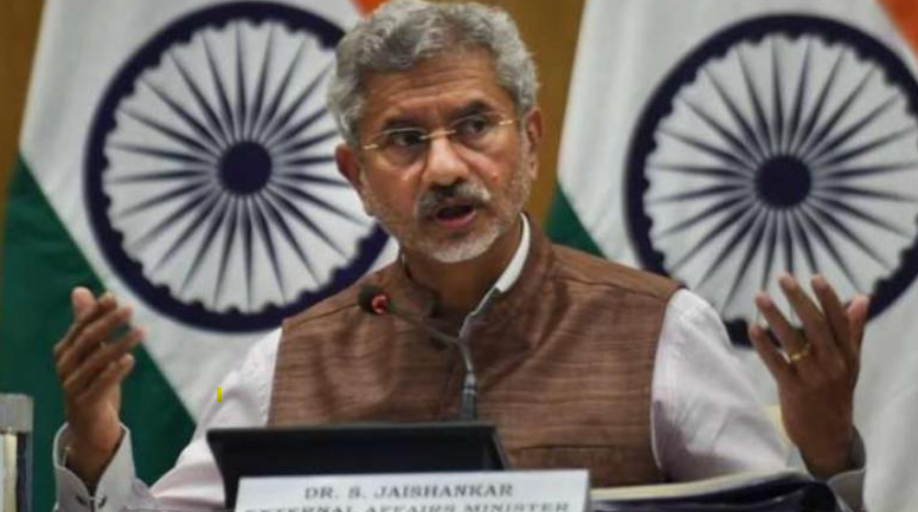
External Affairs Minister S. Jaishankar emphasized that India cannot expect smooth relations with neighboring countries at all times. Speaking during an interaction session, Jaishankar stated that India has consistently tried to maintain stability in its foreign relations, even amid political changes in neighboring nations, by focusing on “shared interests.”
He remarked that most of India’s neighbors understand that cooperation with India is beneficial, while distancing from India could lead to disadvantages. “This realization comes early to some, late to others—except Pakistan, where hostility towards India is institutional,” he said.
Jaishankar shared a link to the full session via his X (formerly Twitter) handle, where he discussed India’s evolving global diplomacy. He noted that relations with the U.S. have seen ups and downs, while India has had to prepare more strategically in dealing with China, especially after the June 2020 Galwan Valley clash.
Highlighting the shift over the past 11 years, he said India has invested significantly in border infrastructure, correcting past mistakes of neglect. Under Prime Minister Narendra Modi’s leadership, Jaishankar said, India has strengthened ties not only with neighboring countries but also with Gulf nations, ASEAN, and the Indo-Pacific region.
He also referenced “Operation Ganga” and “Operation Sindhu,” where India evacuated its citizens during the Ukraine war and the Iran-Israel conflict, respectively.
Citing examples of Sri Lanka and the Maldives, he said India sustained good relations even as governments changed. On Nepal, he acknowledged that India is sometimes affected by internal political shifts but stressed the importance of sustained engagement. “Even when things are tough, we must not give up. The wise approach is to build partnerships and ensure stability in ties,” he concluded.