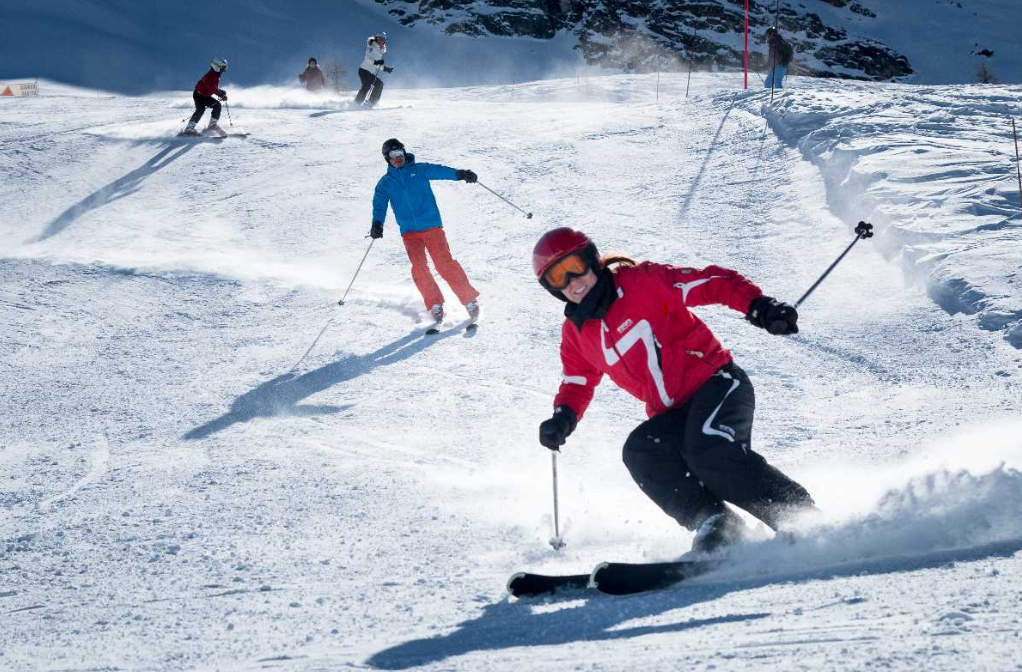
The National kiing Championship is underway in Auli, Chamoli, but reduced snowfall has shaped this year’s competition. Located at an altitude of 2,500 to 3,050 metres above sea level, Auli—often referred to as India’s Switzerland—usually remains covered in thick snow from late December to February. This season, however, the slopes appear patchy due to limited snowfall.
Although fresh snowfall in the last week of January briefly revived the ski slopes, the continuity of snowfall has not been maintained. Bright daytime sunshine has helped retain some snow cover, but the usual three to four feet of snow has shrunk to nearly one-and-a-half to two feet, mostly concentrated at higher elevations.
The slope selected for the championship currently has snow cover stretching only about 400 metres. In several areas, grass is visible between snow patches, creating challenges for skiers and organisers. While the event continues as scheduled, the thinner snow layer has raised concerns among participants and local observers. Some link the situation to rising global temperatures, while others cite shifting weather patterns.
Despite the reduced snow, Auli continues to attract tourists and winter sports enthusiasts. Visitors have been enjoying panoramic Himalayan views alongside the championship activities. From Auli, the majestic Nanda Devi peak—India’s second-highest mountain at 7,816 metres—can be seen clearly, adding to the scenic appeal of the venue.
The ropeway journey from Jyotirmath to Auli remains a major attraction, offering travellers a passage through clouds and dense deodar forests. Auli also houses one of the highest artificial lakes in the region, which plays a role in supporting snow-making activities during lean snowfall periods.
Also Read This – Chicken Feed Theft Case Solved in Roorkee, One Accused Arrested by Police
The ongoing championship has once again highlighted both Auli’s global reputation as a ski destination and the growing challenges posed by inconsistent winter conditions. Organisers and local stakeholders are now closely watching weather patterns as the season progresses.