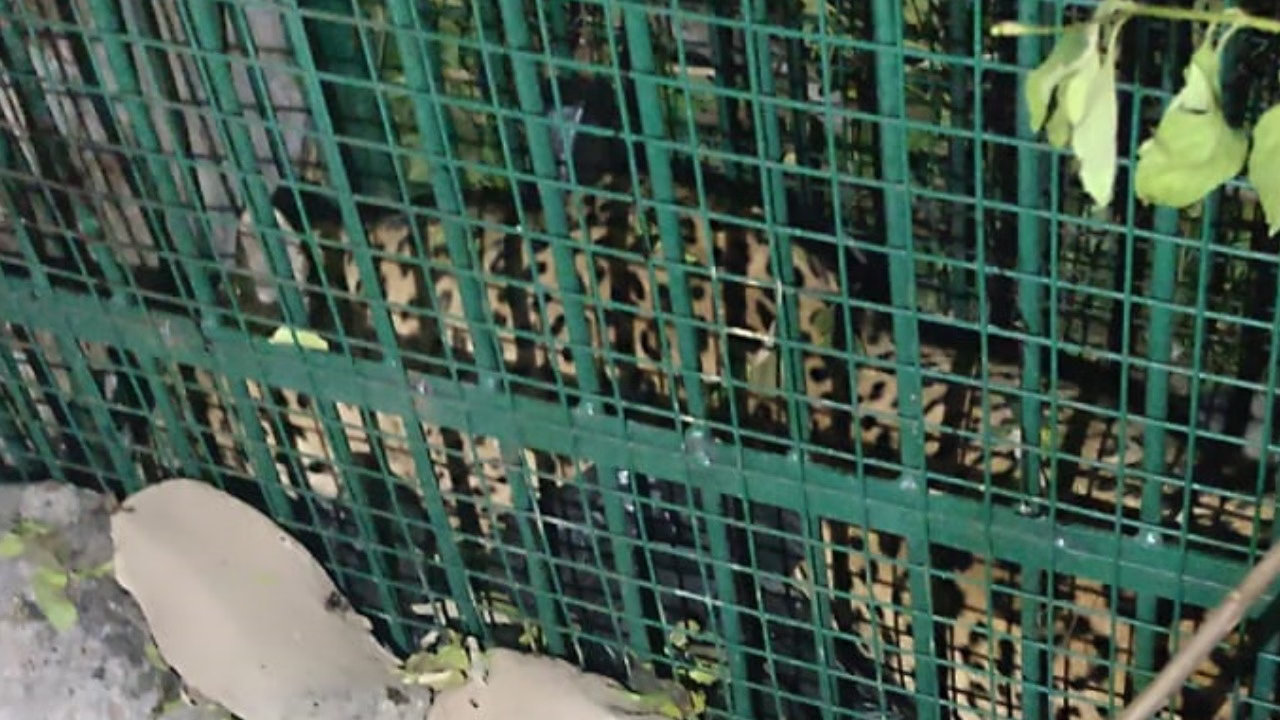
A leopard that had been kept in captivity for 22 days at the Dhumakot Range Headquarters under the Garhwal Forest Division died inside its cage after authorities allegedly failed to receive timely instructions on whether it should be shifted to a rescue centre or released into the wild.
The leopard was captured on July 3 near Banasi village in the Sald Mahadev area of Nainidanda, days after a 65-year-old woman, Sushila Devi, was killed in a suspected leopard attack on June 27. Following the incident, the Forest Department collected biological samples from the victim’s body and sent them to the Wildlife Institute of India (WII) for forensic analysis.
After the male leopard was trapped, its samples were also sent to WII for comparison. However, the institute later confirmed that the samples did not match, indicating that the captured leopard was not the animal responsible for the fatal attack.
Following the mismatch report, the Divisional Forest Officer (DFO), Garhwal, sought directions from senior authorities on whether the leopard should be transferred to a rescue centre or released back into the forest. According to officials, no decision was communicated, and the animal remained confined in the cage.
During its prolonged captivity, the leopard reportedly became increasingly distressed and sustained injuries while struggling inside the enclosure. On July 25, the animal died in captivity despite receiving medical treatment.
DFO Mahatim Yadav said the leopard had injured itself while struggling in the cage and was treated by veterinarians, but could not be saved. Range Officer Subhash Ghildiyal said a panel of two veterinary doctors conducted the post-mortem on Monday, preserved the viscera for examination, and later disposed of the carcass as per protocol.
Officials said the leopard was estimated to be 8–10 years old. A medical examination conducted on July 6 had found the animal to be healthy, although veterinarians had noted that it was highly aggressive and warned that it should not be kept in captivity for an extended period.
The incident has raised serious questions over administrative delays in wildlife management and decision-making, particularly in cases involving captured wild animals awaiting official clearance for relocation or release.