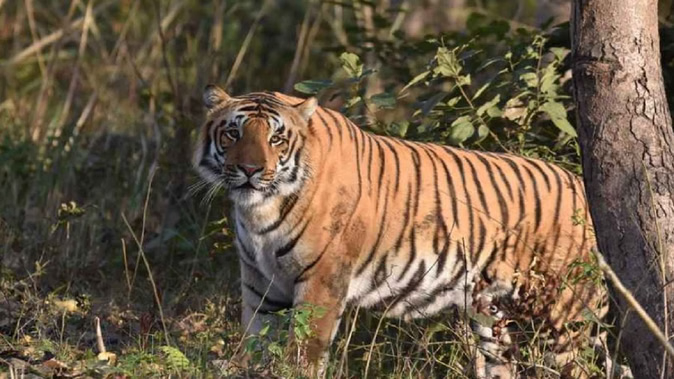
Dehradun: A major boost to wildlife conservation efforts in Uttarakhand has come as Rajaji Tiger Reserve has received approval from the National Tiger Conservation Authority to bring five more tigers from Corbett National Park. The proposed relocation includes three tigresses and two tigers, aimed at strengthening the tiger population in Rajaji’s western-southern landscape.
Rajaji Tiger Reserve authorities had recently made a presentation before the NTCA seeking permission for the second phase of the tiger translocation project. Following the approval, officials expect the initiative to significantly improve tiger breeding and biodiversity conservation in the region.
Second Phase of Tiger Relocation Project
Efforts to establish a stable tiger population in the western part of Rajaji have been underway for several years. Under a tiger rehabilitation project guided by the NTCA, the first tiger was relocated to the reserve in December 2020. Between 2020 and 2025, a total of five tigers, including three tigresses and two tigers, were shifted from Corbett to Rajaji’s western region. After medical examinations, all animals were released into the forest with satellite radio collars to monitor their movement and health.
The first phase of the project concluded in May 2025 when the fifth tiger was released in the Motichur Range. The newly approved second phase will involve relocating another three tigresses and two tigers.
Setbacks During Earlier Efforts
The project has faced challenges in the past. In 2024, a tigress in the reserve gave birth to four cubs, raising hopes for a self-sustaining population. However, two cubs were reportedly killed by a leopard, while the whereabouts of the remaining two could not be confirmed. Officials also believe that three of the five tigers relocated between 2020 and 2025 may have moved outside the park area, although one of them occasionally returns within reserve boundaries.
Western Rajaji Was Once Tiger-Free
Rajaji Tiger Reserve currently has around 55 tigers, most of which are concentrated in the eastern sector due to its connectivity with Corbett National Park. The western region had become virtually tiger-free because human-made barriers such as roads and the Chilla Canal restricted tiger movement.
The reserve is divided into eastern and western sections by the Ganga River. While the eastern side includes the Gauri, Chilla and Rawasan ranges, the western side comprises Haridwar, Kansrao, Motichur, Dholkhand, Beribara, Chilla Wali and Ramgarh ranges.
Wildlife experts believe the western landscape has sufficient prey and habitat resources to support a larger tiger population if connectivity and conservation measures continue to improve. The tiger translocation plan was first prepared in 2016 and received NTCA approval in 2018. The first tiger was shifted to Motichur on 24 December 2020, followed by a tigress in January 2021, another tigress in May 2023, a tigress in March 2024, and a tiger in May 2025.
According to Koko Rosha, NTCA has agreed to the proposal and formal written approval is expected soon. Once received, the remaining procedures for relocation will begin.