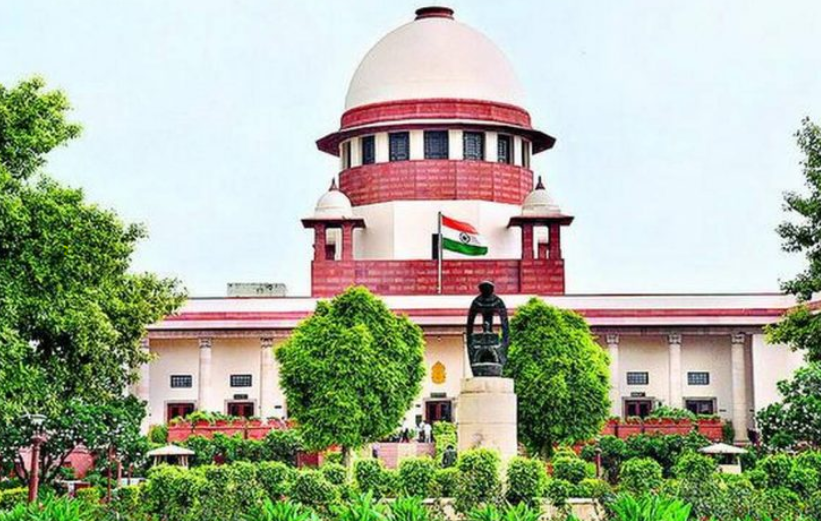
The Supreme Court will hear a plea on 19 August challenging the Uttarakhand High Court’s order directing the Badrinath-Kedarnath Temple Committee to appoint an administrator for the Maa Chandi Devi Temple in Haridwar. The petition, filed by Mahant Bhawani Nandan Giri through advocate Ashwini Dubey, argues that the High Court’s decision was arbitrary, illegal, and against natural justice.
The petitioner, a “sevayat” (priest actively involved in temple rituals), claimed that the High Court transferred control of the temple without evidence of mismanagement. He argued that a panel consisting of the Haridwar District Magistrate and Senior Superintendent of Police had been overseeing the temple since a 2012 High Court order, and no complaints of irregularities or misuse of funds had ever arisen.
The petition further stated that the High Court passed the order during the hearing of an unrelated anticipatory bail plea filed by a woman named Reena Bisht, who claims to be in a live-in relationship with temple priest Rohit Giri. Rohit’s wife, Geetanjali, had lodged an FIR on 21 May against him, Reena, and others, alleging that Reena attempted to run over their son with a car on 14 May.
The petitioner alleged that the High Court issued the order without notice or hearing, sidelining both the sevayat and the chief trustee. He said the court wrongly handed the temple’s management to the Badrinath-Kedarnath Committee, despite the existing panel working honestly.
The Maa Chandi Devi Temple, established in the 8th century by Adi Shankaracharya, has been traditionally served by the petitioner’s family for generations. The Supreme Court had earlier issued notice to the Uttarakhand government on 28 July and clarified that any decision by the Badrinath-Kedarnath Committee would be subject to the outcome of this petition.