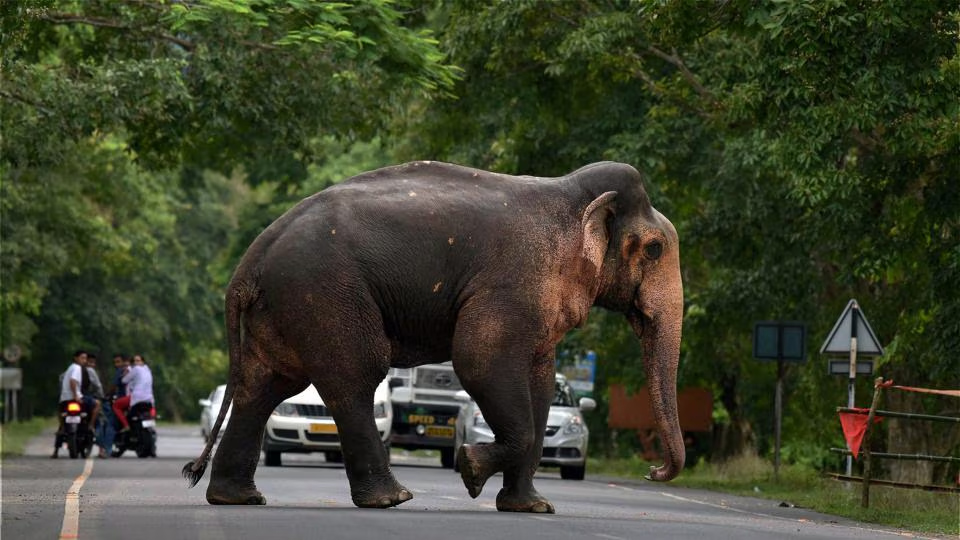
In preparation for Kumbh Mela 2027, the Uttarakhand Forest Department has decided to use radio collars to monitor elephant movement in the Haridwar Forest Division. As part of the initiative, the lead elephant of each herd will be identified and fitted with a radio collar, allowing forest officials to track the movement of the entire herd in real time.
The department has previously implemented measures such as trenches and solar fencing to prevent elephants from entering human settlements. However, incidents of human-elephant conflict have continued, prompting authorities to adopt more advanced monitoring methods.
With technical support from the Wildlife Institute of India (WII), a detailed study is currently underway to identify the number of elephant herds, their movement patterns, the areas they frequently visit, and the timing of their movement into populated regions.
Once the lead elephant of a herd is identified, it will be fitted with a radio collar. Forest officials will then be able to monitor the herd’s location continuously. If the herd approaches human settlements, response teams will be alerted immediately to safely guide the elephants back into forest areas, reducing the risk of conflict.
The initiative was discussed during the meeting of the State Wildlife Board and the State-Level Tiger Steering Committee, chaired by Chief Minister Pushkar Singh Dhami on Friday. Officials informed the meeting that a proposal seeking permission to fit radio collars has been sent to the Ministry of Environment, Forest and Climate Change.
According to Haridwar Forest Division DFO Swapnil Aniruddh, the study has been underway since May. The Wildlife Institute of India will identify the herd leaders before the collars are fitted. He added that WWF has already provided four radio collars for the project. During the previous Kumbh Mela, four elephants were also fitted with radio collars as part of wildlife monitoring efforts.